<body><script type="text/javascript"> function setAttributeOnload(object, attribute, val) { if(window.addEventListener) { window.addEventListener('load', function(){ object[attribute] = val; }, false); } else { window.attachEvent('onload', function(){ object[attribute] = val; }); } } </script> <div id="navbar-iframe-container"></div> <script type="text/javascript" src="https://apis.google.com/js/platform.js"></script> <script type="text/javascript"> gapi.load("gapi.iframes:gapi.iframes.style.bubble", function() { if (gapi.iframes && gapi.iframes.getContext) { gapi.iframes.getContext().openChild({ url: 'https://www.blogger.com/navbar/1042626312146086864?origin\x3dhttp://medreader.blogspot.com', where: document.getElementById("navbar-iframe-container"), id: "navbar-iframe" }); } }); </script>

Blog Team

Archives

August 28, 2007

Coloring Compound in Fruits, Veggies May Cut Colon Cancer Risk


Compounds called anthocyanins, which give color to most red, purple and blue fruits and vegetables, may help protect against colon cancer, an Ohio State University study says.

The findings, presented Sunday at the American Chemical Society's annual meeting in Boston, may help advance knowledge about what gives fruits and vegetables their cancer-fighting properties which, in turn, could eventually lead to the development of new cancer treatments.

"These foods contain many compounds, and we're just starting to figure out what they are and which ones provide the best health benefits," lead author Monica Giusti, an assistant professor of food science at the university, said in a prepared statement.

More information
The American Cancer Society has more about healthy eating, exercise and cancer prevention.

| Tags: Cancer, Nutrition, Public Health and Safety |
Labels: , , ,

August 25, 2007

Marriage-Minded Women Focus on Men's Faces


When it comes to a woman's choice of a life-partner, a man's face may mean a lot, a new study finds.

Many women regard men with masculine facial features -- such as a square jaw, larger nose and smaller eyes -- as unsuitable long-term partners, because they're more likely to be domineering, unfaithful, unaffectionate and poor parents, U.K. researchers have found.

On the other hand, women believe that men with finer facial features -- fuller lips, wide eyes and thinner, more curved eyebrows -- to be more committed, less likely to cheat, and to make better parents, said the study by psychologists at Durham and St. Andrews Universities.

More information
There's more on first impressions at the American Psychological Association.

| Tags: Anxiety, Relationships, Women's Health |

Labels: , , ,

August 23, 2007

Toothbrushing May Strengthen Gums


It may seem contradictory, but the cell damage caused by brushing your teeth may help keep your gums healthy, U.S. researchers say.

Toothbrush bristles tear holes in the epithelial cells that line the gums and tongue, causing a momentary rupture, explains a team at the Medical College of Georgia.

Calcium (which is abundant in saliva) then moves into the cells and triggers internal membranes to move up and patch the holes, the researchers reported in the August issue of the Journal of Dental Research.

This repair takes a few seconds. During that time, growth factors that promote the growth of collagen, new blood cells and blood vessels leak out of the damaged epithelial cells. The injury to these cells also turns on expression of a gene that's often activated under stress and may be the first step in a response such as cell division or growth, the researchers said.

More information
The American Dental Association has more about cleaning your teeth and gums.

| Tags: Oral Care |

Labels: ,

August 22, 2007

Health Tip: Before a Colonoscopy


A colonoscopy -- used to detect colon cancer and other potential problems -- involves use of a long, flexible tube with a camera that takes images of the colon.

Before having a colonoscopy, you should follow certain do's and don'ts to ensure an accurate procedure. This list is provided by the U.S. National Digestive Diseases Information Clearinghouse:

- Avoid all solid foods and any beverages with food coloring for one to three days before a colonoscopy.
- You may eat fat-free bouillon or broth soups, or gelatin.
- You may drink water, strained fruit juice, plain coffee, plain tea or diet soda (no food coloring).
- As certain medications may affect your results, tell your doctor if you are taking aspirin, arthritis medications, blood thinners, medications for diabetes, or any vitamins containing iron.

| Tags: Cancer, Digestive |

Labels: , , , ,

August 20, 2007

Health Tip: Treating a Blister


Blisters are sore, swollen areas on the skin where fluid has collected beneath an outer layer of skin. Blisters are caused by friction, often from poorly fitted shoes or socks that rub against the skin.

Here are suggestions on caring for a blister, courtesy of the University of Michigan Health System:

Steps should be taken to avoid further irritating the problem area.
Large blisters can be carefully drained with a sterilized needle, then covered with antibiotic ointment and a bandage.
For extra protection, purchase a moleskin at a drugstore. Cut a hole that's larger than the blister in the moleskin, creating a moleskin "donut." Then apply the moleskin so that the hole is over the blister.
See your doctor about any blisters that don't heal in a reasonable amount of time, or look like they may be infected.

Sourse - HealthDay News

| Tags: Skin and Beauty |

Labels:

August 18, 2007

Trial vaccine may slow breast cancer tumors


A vaccine designed to treat breast cancer appeared to be safe in women with advanced disease and showed signs of actually slowing down tumors, U.S. researchers reported on Friday.

Dendreon Corporation, maker of the Provenge prostate cancer vaccine, calls the new vaccine Neuvenge. It targets a type of breast cancer called her2/neu-positive breast cancer, which affects between 20 percent and 30 percent of breast cancer patients.

Like Provenge, Neuvenge is made using immune cells from the cancer patient, so it is a tailor-made vaccine.

SOURSE - Washington Post

| Tags: Breast Cancer, Cancer, Public Health and Safety, Women's Health |

Labels: , , , ,

August 17, 2007

Obesity Heightens Kidney Disease Risks


Chronic kidney disease patients who are also obese are much more likely than normal-weight patients to have a condition called hyperparathyroidism, which raises their risk of heart problems and death, U.S. researchers say.

This study of 496 patients with moderate to severe chronic kidney disease who were not yet on dialysis showed a significant association between obesity and hyperparathyroidism. As body mass increased, so did PTH levels, the researchers said.

"We knew that in people with normal kidney function obesity leads to impairment in vitamin D metabolism and elevated PTH levels, but this phenomenon was never studied in patients with chronic kidney disease," lead author Dr. Csaba P. Kovesdy, of Salem VA Medical Center in Salem, Va., said in a prepared statement.

"Since both obesity and hyperparathyroidism are very complex problems in chronic kidney disease, establishing an association between the two is important because of potential prognostic and therapeutic implications," Kovesdy said.

The study is published in the September issue of the Clinical Journal of the American Society of Nephrology.

Sourse - HealthDay News

| Tags: Heart Health, Women's Health, Work and Life Health |

Labels: ,

August 13, 2007

Minorities at higher risk of arthritis disability


Black and Hispanic adults with arthritis are more likely than whites to become disabled from the joint disease, new research findings suggest.

In a study that followed nearly 7,300 Americans with arthritis for six years, researchers found that African-American patients were twice as likely to develop a disability as their white counterparts. The same was true of Hispanic adults who spoke Spanish as their primary language, but not primarily English-speaking Hispanic patients.

A range of factors -- from poorer overall health to lack of insurance to less-healthy lifestyles -- together explained the racial disparity, the study found.

SOURCE: Arthritis & Rheumatism, August 2007.

| Tags: Arthritis, Back Pain, Public Health and Safety |

Labels: , ,

Personality may influence irritable bowel syndrome


People who experience high levels of stress and anxiety appear to be more likely to develop irritable bowel syndrome (IBS) following a severe gastric infection, UK and New Zealand researchers report

A variety of studies have suggested that the cause of IBD has psychological and behavioral components, Dr. Rona Moss-Morris of the University of Southampton and Dr. Meagan J. Spence of the University of Auckland point out in the medical journal Gut.

This study shows that various psychological factors, particularly stress, anxiety and a tendency to push oneself to keep going when ill and then collapse in response, interact with the physical illness in causing IBS, Moss-Morris told Reuters Health.


SOURCE: Gut, August 2007.

| Tags: Addiction, Anxiety, Digestive, Personality, Work and Life Health |

Labels: , , , ,

August 10, 2007

Insomnia may lead to toilet visits, study finds


Insomniacs may not only toss and turn all night -- their symptoms may be worsened by a constant need to get up and urinate, Danish researchers reported on Wednesday.

Tests on 20 people who were deliberately deprived of sleep produced more urine at night, and it was saltier than usual, the researchers said. The effects were much stronger in men than in women.

Birgitte Mahler and colleagues at Aarhus University Hospital in Denmark found no differences in urine production or quality during the day in their sleep-deprived volunteers.

Sleep deprivation reduced the usual dip in blood pressure that is seen at night, they found. This, in turn affected blood pressure-related substances such as rennin, angiotensin II and aldosterone, which could have in turn kept the kidneys on a daytime schedule, the researchers said.

The urine of the sleep-deprived volunteers also contained higher than usual levels of sodium and potassium.

| Tags: Anxiety, Sleeping Disorders, Stress |

Labels: , ,

August 6, 2007

Ovarian Tissue Successfully Transplanted in Sisters

For the first time, a woman whose ovaries were damaged by drug and radiation treatments has undergone a successful transplant of ovaries from her genetically non-identical sister, Belgian researchers report.
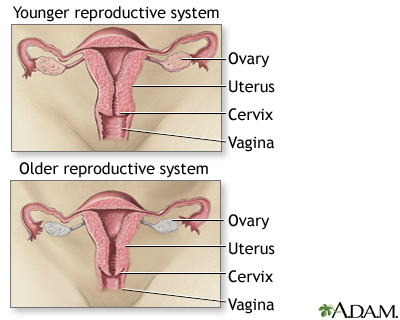

Previously, other researchers had successfully transplanted ovarian tissue between genetically identical twin sisters.

This method of restoring ovarian function might be used when a woman has undergone chemotherapy or radiation, which can destroy ovarian function, Donnez said. "Women can also have ovarian tissue frozen before undergoing treatment and transplanted back after the end of chemotherapy," he said.

| Tags: Pregnancy, Sexual Health, Women's Health |

Labels: , ,

Health Tip: Coping With Menopause


When a woman's menstrual period stops and hormonal changes begin, she is going through menopause. Symptoms, including hot flashes, can range from mild to severe.

The U.S. Department of Health and Human Services offers these suggestions to help alleviate menopausal symptoms:
- To help prevent hot flashes, avoid hot or spicy foods and beverages, stress and being in very warm places. Also, dress in layers.
- For vaginal dryness, try an over-the-counter vaginal moisturizer.
- To help you sleep, get plenty of exercise every day. Also avoid large meals, caffeine, alcohol, smoking or working in the hours before bed.
- To help mood swings, get plenty of regular sleep and exercise.

| Tags: Sexual Health, Women's Health |

Labels: , ,

August 4, 2007

Abstinence Programs Don't Cut HIV Risk

Programs that stress sexual abstinence have had no impact on HIV infection rates in the U.S., according to a new research review. But an abstinence education expert says the study is flawed.
Investigators analyzed findings from 13 studies comparing abstinence-only education to other forms of sexual education or no sexual education at all. Some 16,000 preteens and teens in the U.S. participated in the self-reported studies.

"We found no evidence at all that these abstinence-only programs resulted in lower HIV infection rates for any targeted subgroup," researcher Paul Montgomery, DPhil, of the University of Oxford's Center for Evidence-Based Medicine, tells WebMD.

SOURSE - WebMed

| Tags: Addiction, Depression, HIV and AIDS |

Labels: , , ,

August 3, 2007

Health Tip: Understanding Deep Vein Thrombosis


Deep vein thrombosis (DVT) occurs when a blood clot develops in one of the deep veins. The problem most often occurs in the pelvis, thigh or calf, but may also develop in the chest, arm, or elsewhere.
DVT may trigger swelling or pain, and the clot could travel to the lungs, a potentially fatal condition known as a pulmonary embolism.

Here are some possible triggers of DVT, courtesy of the Society for Vascular Surgery:

Poor blood flow, often caused by being unable to move for long periods.
Major surgery on the chest, abdomen, hip, knee, leg, calf or thigh.
A long trip in a car, train or plane, in which you are seated for long stretches.
Inheriting certain blood clotting abnormalities.
Cancer.

SOURSE - HealthDay News

| Tags: Women's Health |

Labels: ,

Many Heart Attack Patients Don't Get Needed Treatment


While the use of emergency angioplasty and clot-busting drugs to treat heart attack patients in the United States has increased significantly since the mid 1990s, about 10 percent of eligible patients still don't receive these therapies.

That's the finding of a new study in the American Journal of Medicine.

A team of researchers led by cardiologists at the University of Michigan Cardiovascular Center and the Yale University School of Medicine analyzed national data on more than 238,000 people who had heart attacks between 1994 and 2003. All of the patients had a type of heart attack for which emergency reperfusion is appropriate.

During that 10-year period, the percentage of eligible patients who did not receive emergency reperfusion declined from more than 20 percent to 10 percent. While that's a major improvement, having 10 percent of eligible patients go untreated is still too high, the study authors said.

Eligible patients most likely to miss out on emergency reperfusion included: Those whose heart attack symptoms didn't include typical symptoms such as chest pain; those who didn't reach the hospital until six or more hours after the start of their heart attack; women; people over age 75; and non-white people.

More information
The American Heart Association has more about heart attack treatments.

| Tags: Cholesterol, Heart Health, Work and Life Health |

Labels: , ,

August 2, 2007

Drinking While Pregnant May Alter Child's Brain

Being exposed to alcohol before birth may lead to behavioral problems later on, U.S. researchers report.
Heavy prenatal alcohol exposure does not always lead to fetal alcohol syndrome, noted a team reporting in the August issue of Alcoholism: Clinical & Experimental Research. In some cases, it can cause cognitive and behavioral problems without the facial features characteristic of fetal alcohol syndrome.
In their study, researchers at San Diego State University (SDSU) examined 22 children and adolescents (ages 8 to 18 years) -- 13 with and 9 without histories of heavy prenatal alcohol exposure. The participants were part of a larger study at the Center for Behavioral Teratology, SDSU.
The participants who were exposed to heavy alcohol before birth had altered responses in the frontal-striatal areas of the brain.
"Prenatal alcohol exposure can cause damage to the brain that results in significant problems with regulating behavior and optimal thinking and learning," Fryer said.

More information
The U.S. Centers for Disease Control and Prevention have more about disorders related to prenatal alcohol exposure.

| Tags: Children's Health, Pregnancy, Sexual Health, Women's Health |

Labels: , , ,

Progesterone Prevents Preterm Birth for Some Women

The hormone progesterone may help prevent preterm birth in some women, but it doesn't work for everyone.
A pair of studies in the Aug. 2 issue of the New England Journal of Medicine found that progesterone didn't help prevent preterm birth for women carrying twins or triplets, but it was helpful in women carrying a single baby who also had a condition known as short cervix.

"There are a lot of things we try to prevent preterm birth, but few are effective. In women with a history of preterm delivery, preliminary studies have shown progesterone can reduce preterm birth and there are no birth defects associated with it. We don't have anything else to offer women with a history of preterm birth. And we haven't had really had anything to offer women with a short cervix up to this point. Unfortunately, it looks like with twins, we still don't have a lot to offer," Welch said.

| Tags: Children's Health, Pregnancy, Sexual Health, Women's Health |

Labels: , , ,

August 1, 2007

Transient amnesia can be a form of epilepsy


Episodes of transient amnesia, which frequently occur on awakening and are associated with other memory problems, may be a symptom of a distinct type of epilepsy. A British team describes this condition they call transient epileptic amnesia; in a study published in the Annals of Neurology.

Dr. Adam Z. J. Zeman, of the Peninsula Medical School in Exeter, and colleagues recruited 50 patients over an 18-month period who had recurrent episodes of amnesia that were witnessed by another person; otherwise intact mental functioning; and evidence suggesting epilepsy, including EEG abnormalities, response to anticonvulsant therapy; or clinical features, such as hallucinations involving the sense of smell.

SOURCE: Annals of Neurology, June 2007.

| Tags: Children's Health, Eye and Vision, Sleeping Disorders |

Labels: , ,

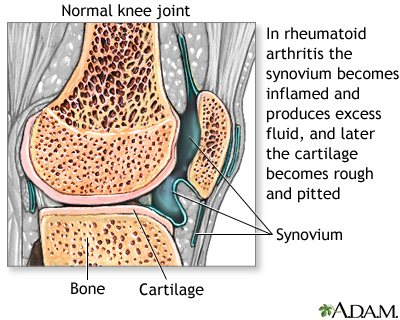
Nicotine may slow progression of rheumatoid arthritis

In people with rheumatoid arthritis, heavy cigarette smoking appears to slow the rate of joint destruction, new research suggests.

Potentially, this may be due to the anti-inflammatory properties of nicotine, Dr. Axel Finckh, University Hospital of Geneva, Switzerland told Reuters Health.

Cigarette smoking is a known risk factor for rheumatoid arthritis, a chronic inflammatory disease that causes progressive joint destruction, disability, and premature death, Finckh and colleagues reported in the Annals of the Rheumatic Diseases.

Yet, it remains unclear if smoking influences the progressive joint destruction and disability cause by rheumatoid arthritis. Finckh and colleagues therefore assessed joint X-rays and results from self-reported functional disability questionnaires for more than 2,000 rheumatoid arthritis patients in their early- to mid-fifties.

SOURCE: Annals of the Rheumatic Diseases, July 2007.

| Tags: Arthritis, Back Pain, Smoking Cessation, Work and Life Health |

Labels: , ,