<body><script type="text/javascript"> function setAttributeOnload(object, attribute, val) { if(window.addEventListener) { window.addEventListener('load', function(){ object[attribute] = val; }, false); } else { window.attachEvent('onload', function(){ object[attribute] = val; }); } } </script> <div id="navbar-iframe-container"></div> <script type="text/javascript" src="https://apis.google.com/js/platform.js"></script> <script type="text/javascript"> gapi.load("gapi.iframes:gapi.iframes.style.bubble", function() { if (gapi.iframes && gapi.iframes.getContext) { gapi.iframes.getContext().openChild({ url: 'https://www.blogger.com/navbar/1042626312146086864?origin\x3dhttp://medreader.blogspot.com', where: document.getElementById("navbar-iframe-container"), id: "navbar-iframe" }); } }); </script>

Blog Team

Archives

August 25, 2007

Marriage-Minded Women Focus on Men's Faces


When it comes to a woman's choice of a life-partner, a man's face may mean a lot, a new study finds.

Many women regard men with masculine facial features -- such as a square jaw, larger nose and smaller eyes -- as unsuitable long-term partners, because they're more likely to be domineering, unfaithful, unaffectionate and poor parents, U.K. researchers have found.

On the other hand, women believe that men with finer facial features -- fuller lips, wide eyes and thinner, more curved eyebrows -- to be more committed, less likely to cheat, and to make better parents, said the study by psychologists at Durham and St. Andrews Universities.

More information
There's more on first impressions at the American Psychological Association.

| Tags: Anxiety, Relationships, Women's Health |

Labels: , , ,

July 19, 2007

New Surgery Brings Back a Smile


By detaching, rerouting and reattaching a muscle used for chewing, surgeons were able to restore the ability to smile to seven patients with facial paralysis.

The procedure, called temporalis tendon transfer, is combined with intense physical therapy before and after surgery and could help similarly stricken patients right away.

"It's really a very doable procedure, and we're realizing how it can be done more simply," said study lead author Dr. Patrick Byrne, director of facial plastic and reconstructive surgery in the department of otolaryngology and head and neck surgery at The Johns Hopkins University School of Medicine in Baltimore. "It's very applicable on a wide scale," he added.

According to the study, which appears in the July/August issue of Archives of Facial Plastic Surgery, correcting facial paralysis is one of the biggest challenges facing reconstructive surgeons.

"People who smile are happier, and people who can't smile are depressed. It really affects the brain," Byrne said. "There's no question we've seen this in these patients. They are happier and more upbeat after having this procedure."

More information
There's more on this topic at The American Academy of Facial Plastic and Reconstructive Surgery.

| Tags: Personality, Relationships, Skin and Beauty |

Labels: , ,

July 16, 2007

Get in Shape for Your Pregnancy


Would-be moms often want to know how to trim their bellies after having children. But how actively do they seek tips for getting their bodies in great shape before getting pregnant?

Until recently, that part of the baby-making equation had been largely absent from the discussion. Increasingly, though, maternal health and prenatal-care experts are urging women to improve their health before conceiving.

The hope is that measures taken to bolster a woman's health prior to conception -- whether it's reaching an optimal weight, controlling a chronic disease or boosting overall nutritional health -- will improve the odds of having an uncomplicated pregnancy and a healthy baby.

Dr. Lorey H. Pollack, director of obstetrics and gynecology at Mercy Medical Center in Rockville Centre, N.Y., has some patients who are very informed and motivated to take better care of themselves before contemplating pregnancy. Others, though, come in pregnant and say, "By the way, I have diabetes; by the way, I have Lupus; by the way, I have high blood pressure, and they're kind of shocked to find out that's an issue when they're pregnant," he said.

Pollack blames the medical profession and the media for failing to get the word out.

But recommendations compiled by experts at the U.S. Centers for Disease Control and Prevention as well as more than 35 government, public and private partners may help to draw attention to the importance of preconception care.

Dr. Hani K. Atrash, associate director for program development at the CDC's National Center on Birth Defects and Developmental Disabilities and co-author of the government report, said, "If a woman or couple has decided to conceive, then at least one pre-pregnancy visit is recommended, and the five most important things to do are":
- Take 400 micrograms of folic acid a day for at least three months before pregnancy to reduce the risk of birth defects.
- Stop smoking and drinking alcohol.
- Consult with a health-care provider to manage any and all medical conditions, including, but not limited to, asthma, diabetes, oral health, obesity, or epilepsy, and maintain up-to-date vaccinations.
- Talk to your doctor and pharmacist about any over-the-counter and prescription medicines you are taking, including vitamins and dietary or herbal supplements.
- Avoid exposure to toxic substances or potentially infectious materials at work or at home, such as chemicals, or cat and rodent feces.
- Atrash was also co-editor of a special supplement of the Maternal and Child Health Journal, published last September, devoted entirely to the topic of preconception care.

"It's always easier to try to prevent a problem than to catch up with it later on," he reasoned.

More information
For more on preconception health, visit the American Pregnancy Association.

Sourse - HealthDay News

| Tags: Pregnancy, Relationships, Women's Health |

Labels: , , , , , , , ,

July 4, 2007

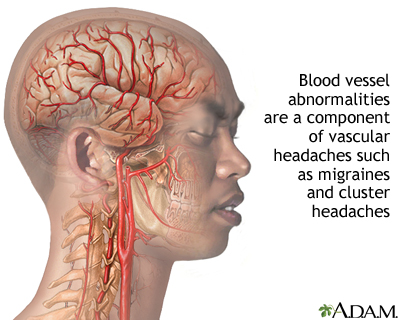
Poorer Kids at Higher Migraine Risk


Adolescents from poorer families are more likely to suffer from migraines than their better-off peers, a new study finds.

This relationship even applied to teens whose parents had no history of migraine, the researchers add.

The findings suggest that factors tied to low income -- such as stress, poor diet and limited access to medical care -- may contribute to migraines.

"Certainly if you look at some of the triggers for migraine being skipping meals, poor sleeping habits, stress, you can see where that would fall in with kids who may be worrying about where they're getting their next meal or getting to bed at a decent time," said Dr. Patricia Stewart-Foulks, assistant professor of pediatrics at Texas A&M Health Science Center College of Medicine and a pediatrician with Scott & White Hospital health centers.

Sourse - HealthDay News

| Tags: Sleeping Disorders, Stress |

Labels: , ,