<body><script type="text/javascript"> function setAttributeOnload(object, attribute, val) { if(window.addEventListener) { window.addEventListener('load', function(){ object[attribute] = val; }, false); } else { window.attachEvent('onload', function(){ object[attribute] = val; }); } } </script> <div id="navbar-iframe-container"></div> <script type="text/javascript" src="https://apis.google.com/js/platform.js"></script> <script type="text/javascript"> gapi.load("gapi.iframes:gapi.iframes.style.bubble", function() { if (gapi.iframes && gapi.iframes.getContext) { gapi.iframes.getContext().openChild({ url: 'https://www.blogger.com/navbar/1042626312146086864?origin\x3dhttp://medreader.blogspot.com', where: document.getElementById("navbar-iframe-container"), id: "navbar-iframe" }); } }); </script>

Blog Team

Archives

August 10, 2007

Insomnia may lead to toilet visits, study finds


Insomniacs may not only toss and turn all night -- their symptoms may be worsened by a constant need to get up and urinate, Danish researchers reported on Wednesday.

Tests on 20 people who were deliberately deprived of sleep produced more urine at night, and it was saltier than usual, the researchers said. The effects were much stronger in men than in women.

Birgitte Mahler and colleagues at Aarhus University Hospital in Denmark found no differences in urine production or quality during the day in their sleep-deprived volunteers.

Sleep deprivation reduced the usual dip in blood pressure that is seen at night, they found. This, in turn affected blood pressure-related substances such as rennin, angiotensin II and aldosterone, which could have in turn kept the kidneys on a daytime schedule, the researchers said.

The urine of the sleep-deprived volunteers also contained higher than usual levels of sodium and potassium.

| Tags: Anxiety, Sleeping Disorders, Stress |
Labels: , ,

August 1, 2007

Transient amnesia can be a form of epilepsy


Episodes of transient amnesia, which frequently occur on awakening and are associated with other memory problems, may be a symptom of a distinct type of epilepsy. A British team describes this condition they call transient epileptic amnesia; in a study published in the Annals of Neurology.

Dr. Adam Z. J. Zeman, of the Peninsula Medical School in Exeter, and colleagues recruited 50 patients over an 18-month period who had recurrent episodes of amnesia that were witnessed by another person; otherwise intact mental functioning; and evidence suggesting epilepsy, including EEG abnormalities, response to anticonvulsant therapy; or clinical features, such as hallucinations involving the sense of smell.

SOURCE: Annals of Neurology, June 2007.

| Tags: Children's Health, Eye and Vision, Sleeping Disorders |

Labels: , ,

July 11, 2007

Learn about Signs of Depression


Typical signs of depression actually show a change in the way a person has come to think about himself.
“I just can’t get myself to do any work around the house. My marriage is falling apart.”
“My hair is thinning. I’m losing my looks. No one will care about me anymore.”

These are typical thoughts of people who are depressed and show a change in thinking, feeling and acting.

Here are other signs of depression :
Continual feelings of sadness, emptiness and helplessness that seem to have no cause
Loss of interest or pleasure in ordinary activities
Decreased energy, fatigue
Sleep and/or eating problems
Difficulty concentrating and making decisions
Feelings of guilt, worthlessness and helplessness
Irritability, excessive crying
Chronic physical aches and pains that do not go away
Feelings of hopelessness
Thoughts of death or suicide, or suicide attempts

If a person shows several of the above signs of depression for an extended period (2 weeks or more) he should consult a physician.
| Tags: Anxiety, Depression, Sleeping Disorders |

Labels: , ,

July 5, 2007

Students With Symptoms Of Mental Illness Often Don't Seek Help


Studies show that the incidence of mental illness on college campuses is rising, and a new survey of 2,785 college students indicates that more than half of students with significant symptoms of anxiety or depression do not seek help.

This is despite the fact that resources are available at no cost on campus, said Daniel Eisenberg, assistant professor at the University of Michigan School of Public Health. Eisenberg and doctoral students Sarah Gollust and Ezra Golberstein conducted the Web-based survey in an attempt to quantify mental health service use and factors associated with whether or not students seek help.

A study looking at the same issues at 12-15 universities nationwide will begin this fall, Eisenberg said.


For more on Eisenberg, see: http://www.sph.umich.edu/iscr/faculty/profile.cfm?uniqname=daneis

| Tags: Anxiety, Public Health and Safety, Sleeping Disorders |

Labels: , , ,

July 4, 2007

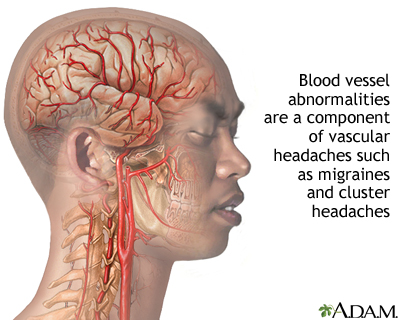
Poorer Kids at Higher Migraine Risk


Adolescents from poorer families are more likely to suffer from migraines than their better-off peers, a new study finds.

This relationship even applied to teens whose parents had no history of migraine, the researchers add.

The findings suggest that factors tied to low income -- such as stress, poor diet and limited access to medical care -- may contribute to migraines.

"Certainly if you look at some of the triggers for migraine being skipping meals, poor sleeping habits, stress, you can see where that would fall in with kids who may be worrying about where they're getting their next meal or getting to bed at a decent time," said Dr. Patricia Stewart-Foulks, assistant professor of pediatrics at Texas A&M Health Science Center College of Medicine and a pediatrician with Scott & White Hospital health centers.

Sourse - HealthDay News

| Tags: Sleeping Disorders, Stress |

Labels: , ,