<body><script type="text/javascript"> function setAttributeOnload(object, attribute, val) { if(window.addEventListener) { window.addEventListener('load', function(){ object[attribute] = val; }, false); } else { window.attachEvent('onload', function(){ object[attribute] = val; }); } } </script> <div id="navbar-iframe-container"></div> <script type="text/javascript" src="https://apis.google.com/js/platform.js"></script> <script type="text/javascript"> gapi.load("gapi.iframes:gapi.iframes.style.bubble", function() { if (gapi.iframes && gapi.iframes.getContext) { gapi.iframes.getContext().openChild({ url: 'https://www.blogger.com/navbar/1042626312146086864?origin\x3dhttp://medreader.blogspot.com', where: document.getElementById("navbar-iframe-container"), id: "navbar-iframe" }); } }); </script>

Blog Team

Archives

September 6, 2007

Scientists Create Breast Tumor Stem Cells


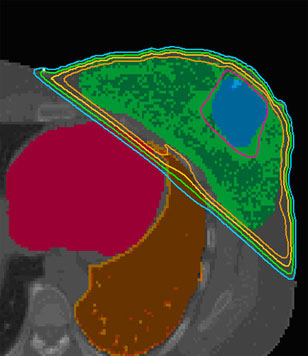
U.S. scientists say they've succeeded in growing breast cancer stem cells from normal tissue.

Since it is suspected that these types of cells give rise to cancer's spread, isolating them could prove invaluable in the fight against the disease, experts say.

"There has not been any publication to my knowledge that has demonstrated a way to isolate these cells from human patients and expand them, meaning grow them in Petri dishes," noted study lead author Dr. Tan Ince, an "independent signaling investigator" at Brigham and Women's Hospital and an instructor at Harvard Medical School, both in Boston.


More information
There's more on breast cancer at the American Cancer Society.

| Tags: Breast Cancer, Cancer, Women's Health |

Labels: , ,

August 28, 2007

Coloring Compound in Fruits, Veggies May Cut Colon Cancer Risk


Compounds called anthocyanins, which give color to most red, purple and blue fruits and vegetables, may help protect against colon cancer, an Ohio State University study says.

The findings, presented Sunday at the American Chemical Society's annual meeting in Boston, may help advance knowledge about what gives fruits and vegetables their cancer-fighting properties which, in turn, could eventually lead to the development of new cancer treatments.

"These foods contain many compounds, and we're just starting to figure out what they are and which ones provide the best health benefits," lead author Monica Giusti, an assistant professor of food science at the university, said in a prepared statement.

More information
The American Cancer Society has more about healthy eating, exercise and cancer prevention.

| Tags: Cancer, Nutrition, Public Health and Safety |

Labels: , , ,

August 22, 2007

Health Tip: Before a Colonoscopy


A colonoscopy -- used to detect colon cancer and other potential problems -- involves use of a long, flexible tube with a camera that takes images of the colon.

Before having a colonoscopy, you should follow certain do's and don'ts to ensure an accurate procedure. This list is provided by the U.S. National Digestive Diseases Information Clearinghouse:

- Avoid all solid foods and any beverages with food coloring for one to three days before a colonoscopy.
- You may eat fat-free bouillon or broth soups, or gelatin.
- You may drink water, strained fruit juice, plain coffee, plain tea or diet soda (no food coloring).
- As certain medications may affect your results, tell your doctor if you are taking aspirin, arthritis medications, blood thinners, medications for diabetes, or any vitamins containing iron.

| Tags: Cancer, Digestive |

Labels: , , , ,

August 18, 2007

Trial vaccine may slow breast cancer tumors


A vaccine designed to treat breast cancer appeared to be safe in women with advanced disease and showed signs of actually slowing down tumors, U.S. researchers reported on Friday.

Dendreon Corporation, maker of the Provenge prostate cancer vaccine, calls the new vaccine Neuvenge. It targets a type of breast cancer called her2/neu-positive breast cancer, which affects between 20 percent and 30 percent of breast cancer patients.

Like Provenge, Neuvenge is made using immune cells from the cancer patient, so it is a tailor-made vaccine.

SOURSE - Washington Post

| Tags: Breast Cancer, Cancer, Public Health and Safety, Women's Health |

Labels: , , , ,

August 3, 2007

Health Tip: Understanding Deep Vein Thrombosis


Deep vein thrombosis (DVT) occurs when a blood clot develops in one of the deep veins. The problem most often occurs in the pelvis, thigh or calf, but may also develop in the chest, arm, or elsewhere.
DVT may trigger swelling or pain, and the clot could travel to the lungs, a potentially fatal condition known as a pulmonary embolism.

Here are some possible triggers of DVT, courtesy of the Society for Vascular Surgery:

Poor blood flow, often caused by being unable to move for long periods.
Major surgery on the chest, abdomen, hip, knee, leg, calf or thigh.
A long trip in a car, train or plane, in which you are seated for long stretches.
Inheriting certain blood clotting abnormalities.
Cancer.

SOURSE - HealthDay News

| Tags: Women's Health |

Labels: ,

July 31, 2007

1 Marijuana as Damaging as 5 Cigarettes to Your Lungs


Smoking just one marijuana joint is the same as smoking five cigarettes in terms of the damage it does to your lungs, a new study found.
Lung damage from marijuana results in chronic bronchitis and other respiratory problems. But whether marijuana causes emphysema or lung cancer isn't clear, the researchers said."This damage is a full range from symptoms to structural lung damage and reduced lung function," said lead researcher Dr. Richard Beasley, director of the Medical Research Institute of New Zealand, in Wellington.
Beasley thinks marijuana smokers should heed the study's findings. "Many people think that marijuana is safe, but this shows that it's not safe. Hopefully, this will avoid a lack of knowledge among smokers," he said.

More information
For more about marijuana, visit the U.S. National Institute on Drug Abuse.

| Tags: Addiction, Lung Cancer, Smoking Cessation |

Labels: , , ,

July 27, 2007

Study: Loading Up on Fruits and Veggies Won't Lower Breast Cancer Recurrence


A long-term study of breast cancer survivors shows that eating more than the recommended 5 daily servings of vegetables and fruit has no effect on breast cancer recurrence or deaths. Although researchers are disappointed by the finding, they say women should still strive to fit plenty of these healthy foods into their diet because they have other benefits.

"There are many reasons women should eat a healthy diet, but for breast cancer, there's little evidence that the foods you eat impact risk," says Colleen Doyle, MS, RD, director of nutrition and physical activity at ACS. "What is important is how much you eat, because being overweight is an established risk factor for developing postmenopausal breast cancer, and it also increases the risk of recurrence. That's the message we want breast cancer survivors to know: Watching your weight is really important."

The study, called the Women's Healthy Eating and Living (WHEL) Trial, was led by a team from the University of California, San Diego, and included researchers from 7 other institutions. The participants were more than 3,000 women (pre- and post-menopause) who had been treated for stage I, II, or III breast cancer.

The women were randomly assigned to 2 diet groups: The control group was told to follow US dietary guidelines, which recommend eating at least 5 servings of fruits and vegetables each day, more than 20 grams of fiber, and no more than 30% of calories from fat.

The second group was told to boost their fruit and veggie intake to include 5 vegetables, 3 fruits, 16 ounces of vegetable juice, and 30 grams of fiber each day. They were also supposed to cut their fat intake to 15%-20% of total calories. The women in this group got periodic telephone counseling, cooking classes, and newsletters aimed at helping them stick with this eating plan.

Researchers tracked the women's progress for more than 7 years on average. They saw clear differences in the amount of fruits and vegetables the women in the 2 groups ate, although after year 4 of the study, the gap between the 2 groups tended to narrow. On average, the women in the second group never achieved their goal of getting only 15%-20% of their calories from fat; in fact, by year 6, they were eating a higher percentage of fat than at the beginning of the study.

Despite the difference in fruit and vegetable consumption, the 2 groups had very similar cancer experiences during the 7 years. About 17% of women in each group had a recurrence during the study period, and about 10% of women in each group died.

Sourse - American Cancer Society

| Tags: Breast Cancer, Cancer, Women's Health |

Labels: , , ,

July 25, 2007

One Billion People Don't Get Enough Vitamin D


Vitamin D deficiency is a common problem that can lead to a number of serious health conditions, but it can be prevented, says one expert.

People get vitamin D from sun exposure, diet and supplements. Yet vitamin D deficiency is all too common.

In utero and in childhood, not getting enough vitamin D can cause growth retardation, skeletal deformities and increase the risk of future hip fractures. In adults, too little vitamin D can lead to or exacerbate osteopenia, osteoporosis, muscle weakness, fractures, common cancers, autoimmune diseases, infectious diseases and cardiovascular diseases.

Holick says that the current recommended adequate intake for vitamin D needs to be increased to 800 to 1,000 international units (IU) of vitamin D3 per day.

More information
The National Institutes of Health Office of Dietary Supplements has more about vitamin D.

| Tags: Anxiety, Children's Health, Nutrition, Work and Life Health |

Labels: , , ,

July 19, 2007

Simple Steps Improve Appearance After Thyroid Surgery


Cosmetic surgery approaches can lead to better aesthetic outcomes for patients having thyroid surgery, researchers report.The thyroid is a small butterfly-shaped gland located in the neck.Dr. David Terris, chair of the department of otolaryngology-head and neck surgery at the Medical College of Georgia, in Augusta, studied 248 patients who underwent thyroid surgery. He noted that many patients are concerned about their appearance after the surgery.

"It matters to them how big the scar is, if it's even, if it's hidden in a skin crease, if the edges are nicely aligned," Terris said in a prepared statement.
He found "that while keeping the management of the underlying thyroid problems as the first priority, we can still achieve a maximal cosmetic result."
One simple tip is to have patients sit or stand while incision sites are marked, so that the incision sites better blend into the natural lines of the body.
"You want the incision to be in a location that corresponds to a cosmetically favorable area when you are upright at a dinner party, not stretched out on an operating room table," Terris said.
Other cosmetic surgery techniques that can help improve aesthetic outcomes among thyroid surgery patients include:
- Trimming traumatized edges at the incision sites
- Using surgical glues instead of sutures
- Minimizing trauma to surrounding skin
- Minimizing use of drains to manage post-surgery oozing.
- Terris' team published its findings in the July issue of The Laryngoscope.

More information
The American Academy of Otolaryngology -- Head and Neck Surgery has more about the thyroid and thyroid surgery.

| Tags: Cancer, Skin and Beauty |

Labels: , ,

July 18, 2007

Prostate Cancer Treatment Can Speed Heart Attacks


The male hormone-suppressing treatment used against aggressive prostate cancer may help bring on earlier heart attacks in older men, new research suggests.

"The new finding is that in men who have risk factors for heart attack, even six months of androgen-suppression therapy [and] maybe as little as three months, can cause a heart attack to occur sooner by about 2.5 years," said lead researcher Dr. Anthony D'Amico, chief of genitourinary radiation oncology at the Dana-Farber Cancer Institute and Brigham and Women's Hospital in Boston.

More information
A guide to prostate cancer is offered by the American Cancer Society.

| Tags: Cancer, Men's Health, Prostate Cancer |

Labels: , , , ,

Many Men Getting Unnecessary Prostate Cancer Blood Tests


Too many American men are receiving inappropriate PSA (prostate-specific antigen) blood tests for prostate cancer, researchers say.

In many cases, these screenings are being done in populations of either young or elderly men where the test has not proven beneficial, the experts report in the July 9 issue of the Archives of Internal Medicine.

"PSA screening is performed inappropriately in a great proportion in many cases," said lead author Dr. B. Price Kerfoot, from the Veterans Affairs Boston Healthcare System and Harvard Medical School.

For example, most current guidelines do not recommend PSA screening for men younger than 40 years of age, older than 75, or for men who are expected to live less than another 10 years, Kerfoot said. But many men in these groups are nonetheless getting the tests, the study found.

More information
For more information on the risk for prostate cancer, visit the U.S. National Cancer Institute.

| Tags: Men's Health, Prostate Cancer |

Labels: , ,

July 17, 2007

Smokers Toxic to Bar, Restaurant Workers


It's a tip waiters and bartenders could do without.

A potent carcinogen rises quickly in restaurant and bar workers' urine after even brief exposures to secondhand smoke, a new U.S. study finds.

Concentrations of the cancer-causing toxin, called NNK, appear to rise steadily as bar workers' exposure continues, the researchers add.

NNK is "unsafe at any level," according to study lead author Michael Stark, a principal investigator in the health department of Multnomah County, Ore., which includes greater Portland.

"Even with a brief workplace exposure, we were able to detect increases in the level of NNK," Stark said. "On the average, there was a 6 percent increase per hour of work," he said.

Stark said he and his colleagues did the study because "there had been some prior research suggesting you could detect NNK in women and children in homes where workers had smoked."

Funded by the Robert Wood Johnson Foundation's Policy Research Program, Stark and his colleagues focused on 52 nonsmoking employees of bars and restaurants that allowed smoking. They compared NNK levels in the workers' urine with those of 32 workers in areas where laws prohibit smoking in such establishments.

But Stark pointed out that "this is workplace exposure that is completely avoidable."

| Tags: Addiction, Public Health and Safety, Smoking Cessation |

Labels: , , , , ,

Fish Oil Might Slow Prostate Cancer


A new study with mice suggests that diets high in omega-3 fatty acids from fish might help slow prostate cancer.

The comparable levels of dietary omega-3s used in the study "are much higher than the average Western diet, but they are not unachievable," said senior researcher Yong Chen, a professor of cancer biology at Wake Forest University School of Medicine in Winston-Salem, N.C.

Omega-3 fatty acids -- especially the "long-chain" forms found in oily fish -- have become the latest nutrition superstars, with studies suggesting they can help prevent heart disease and even cancer.

The exact mechanism driving the purported anti-cancer effect is still unclear, Chen said. One leading theory contends that specific cellular enzymes metabolize omega-3s in ways that retard malignancy.

More information
There's more on omega-3 fatty acids and cancer at the American Cancer Society.
| Tags: Cancer, Men's Health, Prostate Cancer |

Labels: , , , ,

July 14, 2007

Heartburn Is More Than Just an Annoyance


More than 60 million Americans experience heartburn once a month, and more than 15 million suffer heartburn every day, according to the American College of Gastroenterology (ACG), which hopes to better educate the public on this widespread ailment.

Heartburn occurs when excessive amounts of stomach acid reflux into the esophagus, according to the ACG.
The college offers the following information about heartburn:
Besides being uncomfortable, heartburn can also be a sign of a serious problem called gastroesophageal reflux disease (GERD). Symptoms of GERD include burning chest pain, regurgitation of bitter or sour liquid, difficulty swallowing, and excessive clearing of the throat.
Left untreated, persistent heartburn/GERD symptoms can lead to severe complications such as esophageal strictures or a precancerous condition called Barrett's Esophagus. In rare cases, people with persistent heartburn/GERD develop esophageal cancer.
Eating smaller meals, controlling your weight and avoiding tight-fitting clothes are all ways of reducing heartburn symptoms. Don't lie down after meals, because that makes it easier for stomach contents (including acid) to back up into the esophagus. Do not eat for three to four hours before you go to bed.
Common heartburn triggers include: smoking, caffeine, chocolate, peppermint, fatty and spicy foods, and tomato sauces.
Pregnancy increases the risk of heartburn/GERD symptoms. That's because pregnancy puts greater pressure on the stomach and causes increased production of the hormone progesterone, which relaxes the lower esophageal sphincter muscle, which can allow more acid to reflux into the esophagus.
See a doctor if you: have heartburn two or more times a week; don't get lasting relief from medication; have difficulty swallowing; have unexplained weight loss; experience reflux symptoms lasting more than a year.

More information
The American Academy of Family Physicians has more about heartburn.

Labels: , , ,

July 12, 2007

Cancer risk higher with Western diet


Older Chinese women who eat a Western-style diet loaded with meats and sweets appear to have a greater risk for breast cancer than women who eat mainly soy and vegetables, a new study has concluded.

Previous research has found connections between a meat- and fat-heavy Western diet and several kinds of cancer, as well as heart disease and diabetes. And other research has identified links between obesity and cancer.

Researchers said this study signals a link between breast cancer and overall eating patterns not a single food or nutrient in Asian women, who have long had lower rates of the disease than Western women. But their numbers have started to rise as their diets have become more Westernized.

The study, which is not definitive, looked at general eating habits of about 3,000 women in Shanghai, ranging in age from 25 to 64. About half of that group had been diagnosed with breast cancer and are participants in an ongoing breast cancer study in Shanghai.

| Tags: Breast Cancer, Cancer, Diabetes, Digestive, Heart Health, Nutrition, Women's Health |

Labels: , , , , , ,

July 9, 2007

Chronic Obstructive Pulmonary Disease in seniors years


Chronic obstructive pulmonary disease (COPD) develops slowly over many years sometimes before you notice symptoms such as “feeling short of breath.” Cigarette smoking is the most common cause of COPD. It can also be caused by breathing in lung irritants like pollutions, dust, or chemicals over a long period of time.

Chronic obstructive pulmonary disease is usually diagnosed in people 40 years old or older, and is a major cause of death and illness throughout the world. In the U.S.A., chronic obstructive pulmonary disease is the 4th leading cause of death. There is no cure for chronic obstructive pulmonary disease. It is not a contagious disease. Damage to airways and lungs cannot be reversed.

There are only things you can do to feel better and slow the damage to your lungs.

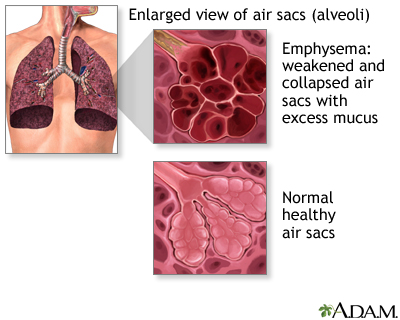
In a healthy person airways of the lungs are clear and open and the air sacs are small, elastic, and springy. In people diagnosed with chronic obstructive pulmonary disease, the airways and air sacs lose their shape and become floppy.

Causes of chronic obstructive pulmonary disease include:

Cigarette smoking (most common cause)
Breathing fumes and other pollutants that irritate and damage the lungs and airways
Pipe, cigar and other types of tobacco smoking can cause COPD especially if the smoke is inhaled.
People with a family history of COPD are more likely to get the disease if they smoke
Secondhand smoke plays a role in causing COPD
Frequent, severe lung infections in childhood may increase the risk for acquiring COPD later in life

Symptoms of chronic obstructive pulmonary disease start years before the flow of air in and out of the lungs is reduced and include:

Cough with sputum production (most common is a cough that does not go away and coughing up lots of sputum)
Shortness of breath especially with exercise
Wheezing or whistling sound when you breathe
Tightness in the chest

It is important to note that not everyone who has a cough and sputum goes on to develop chronic pulmonary obstructive disease.

A doctor looking for chronic pulmonary obstructive disease will examine you, listen to your lungs and ask you questions about your medical history. Physician questions will include what kind of lung irritants you may have been around for long periods of time and if you smoke.

A breathing test called “spirometry” may be used. It is painless and used to show how well your lungs work. Based upon this the spirometry test results, your doctor can determine if you have chronic pulmonary obstructive disease and just how severe it is. There are four levels of chronic pulmonary obstructive disease severity, they are:
People at risk for COPD
People with mild COPD
People with moderate COPD
People with severe COPD

Goals of treatment of chronic obstructive pulmonary disease include:

To relieve symptoms with no or minimal side effects from the treatments
To slow progress of chronic obstructive pulmonary disease
To prevent complications from the disease
To improve overall health

The exact treatment plan for chronic obstructive pulmonary disease can be different for each person and is based on whether symptoms are mild, moderate or severe.

Treatments used for chronic obstructive pulmonary disease include:
Medications such as bronchodilators that work by relaxing the muscles around the airways to open them up and make it easier to breathe. Bronchodilators are inhaled directly into the lungs via an inhaler
Pulmonary or lung rehabilitation
Oxygen treatment
Surgery
Treatments to manage complications or sudden onset of symptoms
Pneumococcal vaccine may be recommended to prevent pneumonia
Annual flu shot to avoid breathing complications from the flu

Surgery is usually done for patients with severe symptoms that do not improve from other types of

treatments, and have a hard time breathing most of the time. The two types of surgery that are considered in cases of severe chronic obstructive pulmonary disease are:
A bullectomy to remove a large air sac that may compress a good lung
A lung transplant

Hospitalization may be needed if:
You have a lot of difficulty catching your breath
You have a hard time talking
Your lips or fingernails turn blue or gray

Source: The American Lung Association

| Tags: Allergy, Flu Health, Lung Cancer, Smoking Cessation |

Labels: , , , ,

July 8, 2007

Merlot mouthwash? Wine can fight germs


Drinking wine can maintain heart health, prevent cancer and even settle a mean case of diarrhea. Research now shows it’s also good for your teeth and throat.

According to a new study, a cocktail of compounds found in both red and white wine fights germs that can cause dental plaque as well as sore throats.

“Exposure to wine had a persistent antibacterial effect,” the authors wrote in their study, detailed in an upcoming issue of the Journal of Agricultural and Food Chemistry. Prior to their research, the authors said the effects of wine against germs found in the mouth hadn’t been studied.

| Tags: Cancer, Digestive, Heart Health |

Labels: , ,

Simple Blood ?


O-no! The chance of receiving mismatched blood during a medical procedure is estimated to be 1 in 12,000, making it a more common problem than blood shortages.

In 2003 Tawnya Brown was awaiting bowel surgery in a Northern Virginia hospital when she decided to switch beds to be closer to the window. The move ultimately killed her. During surgery, Brown mistakenly received two pints of A-negative blood. She was O-positive. An investigation revealed that a technician had drawn blood from the wrong patient. Within minutes of the procedure, the 31-year-old suffered a fatal hemolytic reaction, which resulted in plunging blood pressure and kidney failure.
Blood mix-ups, though rare, are still one of the most feared mistakes in transfusion medicine. "It's the biggest threat today," says Dr. Kathleen Sazama, a transfusion expert at the University of Texas M.D. Anderson Cancer Center in Houston.

| Tags: Allergy, Cancer |

Labels: ,

July 6, 2007

Black vs. White Women on Dieting


Overweight or obese white American women are more likely than their black peers to ask for dieting assistance, such as counseling from a medical professional, a doctor's prescription, membership in a weight-loss group, or advice from a trainer, a new study finds.

The study authors, who surveyed 120 women in Philadelphia, also found that body image was an important motivator for white women in seeking dieting help but not as important to black women.

The findings are published in the current issue of the journal Ethnicity & Disease.
"We found that African-American women did not differ from Caucasians in terms of concerns about body shape and weight," but those concerns were more likely to motivate white women to seek dieting assistance, said lead author Rachel Annunziato, assistant professor in the department of psychiatry, Mount Sinai School of Medicine, New York City.

Sourse - HealthDay News

| Tags: Breast Cancer, Weight Loss |

Labels: , ,

July 5, 2007

Healthy Eating for Life for Women (eBook)


By Physicians Committee for Responsible Medicine, Physicians Committee for Responsible Medicine,
Publisher: Wiley
Number Of Pages: 272
Publication Date: 2002-01-18

Book Description:
Eat your way to better health and well-being.
Making simple changes to your diet can significantly improve your health, from easing your menstrual and menopausal symptoms to strengthening your bones and protecting your heart. This book shows you how. Drawing from the latest medical and dietary research, Healthy Eating for Life for Women presents a complete and sensible plant-based nutrition program that will help you look and feel better, with more energy and vitality than ever before.

Women of all ages-daughters, mothers, and grandmothers-will be surprised to learn how what they eat affects so many aspects of their health. This guide explains how the right foods can ease menstrual and menopausal symptoms, strengthen bones, encourage weight loss, protect the heart, and even help prevent certain cancers. It includes 100 delectable recipes that make healthy eating simple for women and their families. Get it

| Tags: Cholesterol, Digestive, Heart Health, Nutrition, Weight Loss, Women's Health |

Labels: , , , , , ,