<body><script type="text/javascript"> function setAttributeOnload(object, attribute, val) { if(window.addEventListener) { window.addEventListener('load', function(){ object[attribute] = val; }, false); } else { window.attachEvent('onload', function(){ object[attribute] = val; }); } } </script> <div id="navbar-iframe-container"></div> <script type="text/javascript" src="https://apis.google.com/js/platform.js"></script> <script type="text/javascript"> gapi.load("gapi.iframes:gapi.iframes.style.bubble", function() { if (gapi.iframes && gapi.iframes.getContext) { gapi.iframes.getContext().openChild({ url: 'https://www.blogger.com/navbar/1042626312146086864?origin\x3dhttp://medreader.blogspot.com', where: document.getElementById("navbar-iframe-container"), id: "navbar-iframe" }); } }); </script>

Blog Team

Archives

August 6, 2007

Ovarian Tissue Successfully Transplanted in Sisters

For the first time, a woman whose ovaries were damaged by drug and radiation treatments has undergone a successful transplant of ovaries from her genetically non-identical sister, Belgian researchers report.
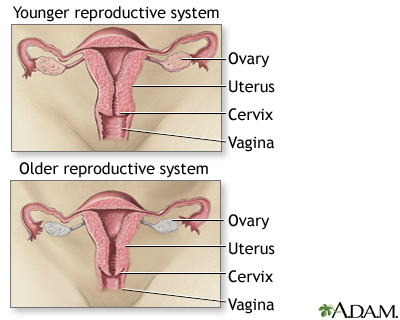
Previously, other researchers had successfully transplanted ovarian tissue between genetically identical twin sisters.

This method of restoring ovarian function might be used when a woman has undergone chemotherapy or radiation, which can destroy ovarian function, Donnez said. "Women can also have ovarian tissue frozen before undergoing treatment and transplanted back after the end of chemotherapy," he said.

| Tags: Pregnancy, Sexual Health, Women's Health |

Labels: , ,

Health Tip: Coping With Menopause


When a woman's menstrual period stops and hormonal changes begin, she is going through menopause. Symptoms, including hot flashes, can range from mild to severe.

The U.S. Department of Health and Human Services offers these suggestions to help alleviate menopausal symptoms:
- To help prevent hot flashes, avoid hot or spicy foods and beverages, stress and being in very warm places. Also, dress in layers.
- For vaginal dryness, try an over-the-counter vaginal moisturizer.
- To help you sleep, get plenty of exercise every day. Also avoid large meals, caffeine, alcohol, smoking or working in the hours before bed.
- To help mood swings, get plenty of regular sleep and exercise.

| Tags: Sexual Health, Women's Health |

Labels: , ,

August 2, 2007

Drinking While Pregnant May Alter Child's Brain

Being exposed to alcohol before birth may lead to behavioral problems later on, U.S. researchers report.
Heavy prenatal alcohol exposure does not always lead to fetal alcohol syndrome, noted a team reporting in the August issue of Alcoholism: Clinical & Experimental Research. In some cases, it can cause cognitive and behavioral problems without the facial features characteristic of fetal alcohol syndrome.
In their study, researchers at San Diego State University (SDSU) examined 22 children and adolescents (ages 8 to 18 years) -- 13 with and 9 without histories of heavy prenatal alcohol exposure. The participants were part of a larger study at the Center for Behavioral Teratology, SDSU.
The participants who were exposed to heavy alcohol before birth had altered responses in the frontal-striatal areas of the brain.
"Prenatal alcohol exposure can cause damage to the brain that results in significant problems with regulating behavior and optimal thinking and learning," Fryer said.

More information
The U.S. Centers for Disease Control and Prevention have more about disorders related to prenatal alcohol exposure.

| Tags: Children's Health, Pregnancy, Sexual Health, Women's Health |

Labels: , , ,

Progesterone Prevents Preterm Birth for Some Women

The hormone progesterone may help prevent preterm birth in some women, but it doesn't work for everyone.

A pair of studies in the Aug. 2 issue of the New England Journal of Medicine found that progesterone didn't help prevent preterm birth for women carrying twins or triplets, but it was helpful in women carrying a single baby who also had a condition known as short cervix.

"There are a lot of things we try to prevent preterm birth, but few are effective. In women with a history of preterm delivery, preliminary studies have shown progesterone can reduce preterm birth and there are no birth defects associated with it. We don't have anything else to offer women with a history of preterm birth. And we haven't had really had anything to offer women with a short cervix up to this point. Unfortunately, it looks like with twins, we still don't have a lot to offer," Welch said.

| Tags: Children's Health, Pregnancy, Sexual Health, Women's Health |

Labels: , , ,

July 21, 2007

Steps Prior to Pregnancy Can Protect Baby

Planning ahead before pregnancy helps new moms give their babies the best possible start in life, experts say.

And to help in that planning, here's an eight-step pre-pregnancy checklist from Barbara Coulter-Smith, a Texas obstetrician/gynecologist at Baylor Regional Medical Center at Grapevine:

Take folic acid supplements. Folic acid is a B vitamin that reduces the risk of neural tube defects such as spina bifida. Few women get enough folic acid in their diet, so it's important to take supplements. Talk with your doctor.
Make sure all your vaccinations are up to date, including immunization against chickenpox and rubella. You should also be up to date on your tetanus shot (every 10 years).
Don't smoke while trying to get pregnant or during pregnancy. Smoking can increase the risk of miscarriage and of low-birth-weight babies. Do not drink alcohol when you're pregnant.
Maintain a healthy weight. Being overweight can increase the risk of gestational diabetes and other pregnancy-related complications.
Exercise helps you maintain or lose weight and helps you manage stress. If you do get pregnant, talk to your doctor about the kinds of exercise that are safe to do during pregnancy.
If you have a chronic medical condition, talk to your doctor about the health risks of pregnancy and about which prescription medications you can still take during pregnancy. It's also important to tell your doctor about any family history of hereditary disorders before you start planning a pregnancy.
After stopping the use of contraception, wait for one spontaneous menstrual cycle before trying to conceive. A normal menstrual cycle signals that the lining of the uterus is healthy enough to support a new life.
Men also need to do some pre-pregnancy planning. Avoid hot tubs, saunas, smoking and alcohol, all of which can affect sperm count.

More information
The U.S. National Women's Health Information Center offers more pre-pregnancy advice.

| Tags: Addiction, Pregnancy, Sexual Health, Women's Health |

Labels: , , , , ,

July 16, 2007

Common Causes of Male Infertility


Infertility -- defined by the American Academy of Family Physicians as the inability of a couple to become pregnant after one year of trying -- affects about 15 percent of the population.

The academy offers this list of common causes of male infertility:
-The most common cause is varicocele, when the veins in the scrotum become enlarged. This can affect sperm production by heating the inside of the scrotum.
-A blockage in the reproductive system.
-Low sperm count.
-Abnormally shaped sperm, or sperm that move abnormally.
-An undescended testicle.
-Certain medications.
-Another medical problem.

Sourse - HealthDay News

| Tags: Men's Health, Sexual Health |

Labels: ,

July 13, 2007

Health Tip: Tame Symptoms of PMS


Premenstrual syndrome (PMS) affects many women just before their menstrual cycles. Common symptoms include cramps, bloating, fatigue and moodiness.

Here are suggestions on how to help curb PMS, courtesy of the U.S. Department of Health and Human Services:
- Get regular exercise.
- Eat plenty of fruits, vegetables and whole grains, and avoid foods high in salt, sugar, caffeine and alcohol.
- Try to get at least eight hours of sleep each night.
- Avoid smoking.
- Keep stress at bay. Diversions might include talking to friends or writing in a journal.

Sourse - HealthDay News

| Tags: Sexual Health, Smoking Cessation, Stress, Women's Health |

Labels: , , ,

Inflammatory Factor Could Spur Male Infertility


A substance present in the body as a result of inflammation may also help cause male infertility, new research suggests.

A team at The Feinstein Institute for Medical Research in Manhasset, N.Y., identified unusual levels of a substance called "macrophage migration inhibitory factor" (MIF) in semen samples obtained from infertile men.

Reporting in the current issue of Molecular Medicine, the researchers theorize that identification of this factor could lead to tests for infertility as well as the development of a male contraceptive.

Inflammation occurs when the body endures infections such as sepsis (blood infection), autoimmune disorders such as rheumatoid arthritis or chronic diseases such as diabetes and heart disease. The factor is present in high levels during those conditions and is linked in some cases to tissue damage.

The researchers analyzed semen from 27 fertile men and 68 infertile men after several days of sexual abstinence. They found that men with fertility problems had MIF levels that were either too low or too high.

Healthy levels of MIF help sperm mature so they can unite with an egg, the team said. When they added the factor to Petri dishes containing healthy sperm, the number and mobility of the sperm decreased.

According to the U.S. Centers for Disease Control and Prevention, there are 2.1 million infertile couples in the United States. Almost 40 percent of infertility problems are due to the male.

Sourse - HealthDay News

| Tags: Diabetes, Heart Health, Men's Health, Sexual Health |

Labels: , , , ,

July 12, 2007

Health Tip: Risk Factors for Placenta Previa


Placenta previa occurs when, during pregnancy, the placenta drops lower in the uterus and covers the opening to the cervix. The placenta may also separate from the uterine wall as the cervix begins to dilate.

Placenta previa affects about one in 200 pregnant women in the third trimester, the American Pregnancy Association says.

The association lists these common risk factors for placenta previa:

1- Having had one or more previous deliveries.
2- Having had a previous Caesarean section.
3- Having had a multiple birth (twins or triplets).
4- Having had prior surgery on the uterus.

Sourse - HealthDay News

| Tags: Sexual Health, Women's Health |

Labels: , ,

July 10, 2007

Having a male twin can reduce woman’s fertility


Women who have a male twin are less likely to marry and have children, perhaps because of being exposed to their brother’s testosterone for nine months in the womb, researchers reported on Monday.

A study of Finnish twins showed that women were 25 percent less likely to have children if their twin was a male. Those who did have children gave birth to an average of two fewer babies than women who had a twin sister.

Based on an analysis of 18th and 19th century data, researchers found women who had a male twin also were 15 percent less likely to get married, Virpi Lummaa of the University of Sheffield in Britain and Finland’s University of Turku and colleagues reported.

| Tags: Children's Health, Sexual Health, Women's Health |

Labels: , ,

Scientists shed new light on male infertility


Scientists in Hong Kong and China have identified for the first time a protein in sperm from humans and from mice that could be responsible for many unexplained cases of male infertility.

Defective versions of the protein, called epithelial ion channel, have previously been reported to be responsible for female infertility.

Writing in the latest issue of the Proceedings of National Academy of Sciences journal, the researchers said they detected the protein in sperm samples from mice and human subjects.

| Tags: Men's Health, Sexual Health |

Labels: ,

July 9, 2007

What is Acne?


As we all know, acne is a skin infection producing blackheads, whiteheads, spots or cysts that normally appear on the face, neck, back, chest and upper arms. If the acne is severe it can leave permanent scarring.
Acne hits at the worse time of a young person's life. Just when they are suddenly aware of the opposite sex and they are struggling to become independent individuals, their confidence is shattered by an eruption of pimples.
| Tags: Sexual Health, Skin and Beauty |

Labels: ,

July 5, 2007

Some therapies may hurt pregnancy chance


LYON, France - Alternative therapies such as reflexology and herbal supplements may reduce a woman's chance of getting pregnant, experts said Wednesday.
Research presented Wednesday at a Lyon meeting of the European Society of Human Reproduction and Embryology examined the impact of alternative therapies on women receiving in-vitro fertilization over a year.
Of 800 Danish women followed for the study, 261 tried treatments including reflexology, herbal supplements, homeopathy, kinesiology and acupuncture.
The women using such treatments overall were 20 percent less likely to get pregnant than those who did not, according to researchers Dr. Jacky Boivin, of Cardiff University, and Dr. Lone Schmidt, from the University of Copenhagen

| Tags: Sexual Health, Women's Health |

Labels: , ,

Health Tip: Endometriosis and Pregnancy


Endometriosis occurs when the endometrium that lines the uterus attaches itself to organs outside the uterus. These implants continue to grow, causing abdominal pain and discomfort.

Other symptoms may include: painful menstruation or sexual intercourse, infertility, painful bowel movements, fatigue, gastrointestinal problems, painful urination or lower back pain.

Although endometriosis can cause scar tissue that can make it difficult for some women to conceive, others have full-term, healthy pregnancies, the American Pregnancy Association says.

Proactive treatments have been successful in helping some women with endometriosis to become pregnant.

Sourse - HealthDay News

| Tags: Sexual Health, Women's Health |

Labels: , , ,

July 1, 2007

How often should you have sex


Question 10: According to Dr. Oz, how often should you have sex?
A) Once a week
B) Twice a week
C) 10 times a month
D) 200 times a year or more

The correct answer is D.

"If you have more than 200 orgasms a year, you can reduce your physiologic age by six years," Dr. Oz says. He bases the number on a study done at Duke University that surveyed people on the amount and quality of sex they had. "They looked at what happened to folks that are having a lot of intercourse over time, and the fact is, it correlated."

Among the benefits of having sex often, Dr. Oz says, is that it can prove that your body is functioning as it is supposed to. "But in addition, having sex with someone that you care for deeply is one of the ways we achieve that Zen experience that we all crave as human beings," he says.

"It's really a spiritual event for folks when they're with someone they love and they can consummate it with sexual activity … seems to offer some survival benefit."

| Tags: Addiction, Sexual Health |

Labels: ,

New sex-related infection passes gonorrhea


A relatively new sexually transmitted infection has surpassed Neisseria gonorrhea in prevalence among young adults in the US, according to a new study.
Mycoplasma genitalium was first identified in the 1980s. It can cause inflammation of the urethra (the urinary passage from the bladder), in men, and inflammation of the cervix and the lining of the uterus in women, possibly leading to infertility. However, it seems many cases of the infection are symptom-free.
In the current study, researchers at the University of Washington, Seattle, tested 1714 women and 1218 men between the ages of 18 and 27 years participating in Wave III of the National Longitudinal Study of Adolescent Health.
Results of the study are published in the American Journal of Public Health. The investigators found Mycoplasma genitalium infection in 1.0 percent of the participants. In contrast, the prevalence of gonorrhea was 0.4 percent. The prevalence of chlamydia infection was 4.2 percent.
The prevalence of Mycoplasma genitalium infection was 11 times higher among individuals living with a sexual partner, seven times higher among blacks and four times higher among those who use condoms during sex.
None of the genitalium-positive individuals had any discharge.
"Many M. genitalium infections are asymptomatic, like chlamydial infections," principal investigator Dr. Lisa Manhart told Reuters Health. "However, unlike chlamydia, it is probably too soon to recommend widespread screening for M. genitalium."
There are no commercial tests to detect the organism, she explained. Furthermore, she and her colleagues note in their report that it is not clear "whether M. genitalium-infected persons require or benefit from treatment -- and if so, what antimicrobial therapy should be recommended."

| Tags: Men's Health, Sexual Health, Women's Health |

Labels: , , ,

May 5, 2007

Just six weeks into pregnancy find baby sex


Parents can find out the sex of their baby at just six weeks by using a home test available on the Internet, it emerged yesterday.

The £189 mail-order kit works by testing a single drop of a pregnant woman's blood.

It produces the same information usually first given at 20 weeks by an ultrasound scan.

Some parents will use the test to help them plan ahead but pro-life campaigners warned last night that a result at six weeks could lead to a sharp rise in the number of abortions.

| Tags: Sexual Health |

Labels: ,

April 25, 2007

New Study Says: Abortion Does Not Increase Breast Cancer Risk


Few years ago I have read that abortion increase incidence to breast cancer risk. I thought the reasons was hormonal disorder. But now a new study show reverse.
A new US study suggests that breast cancer risk is not increased by induced abortion or miscarriage, contrary to the findings of some other studies and the claims made by some groups.
This study covered 973,437 person-years of follow-up between 1993 and 2003.

The results showed that:
-- 1,458 new cases of invasive breast cancer occurred during the follow-up.
-- 16,118 participants (15 per cent) reported a history of induced abortion.
-- 21,753 (21 per cent) reported a history of spontaneous abortion (miscarriage).
-- Neither abortion nor miscarriage was linked significantly with breast cancer.
-- The results were unaffected by number of abortions or miscarriages, age of woman when the events occurred, and other factors.

| Tags: Breast Cancer, Cancer, Sexual Health |

Labels: , ,

Doctors want Pap test for gay men


Pap test is basic exam that women do after 20 years old, this test help doctors spot precancerous lesions and wipe them out before they have a chance to turn malignant.

Dr. Joel Palefsky, director of the Anal Neoplasia Clinic at UCSF, encourages anal Pap tests for gay men and other groups at high risk of developing anal cancer.

"We haven't proven it yet, but we believe that we are likely to be preventing anal cancer," said Palefsky, who hopes this summer to publish results from a study on anal cancer prevention. "Our approach is to move forward on the assumption that we are preventing cancer and working in parallel to the kind of research studies that will convince everyone else."

| Tags: Cancer, Men's Health, Sexual Health |

Labels: , , ,